Accompanying Art Auctions with Confidence – My Preparation
Reading time: 10 minutes
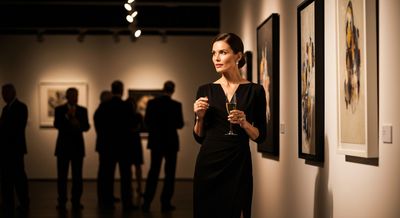
The first time I stepped into a Christie's auction house in London, I felt it immediately: different rules apply here. The hushed atmosphere, the almost religious silence before the sale begins, the discreet gestures of the bidders, everything demanded preparation that went beyond an elegant dress code. Since then I've learned that accompanying art auctions is one of the most demanding, but also most fascinating, tasks in lifestyle dating. Anyone who wants to carry themselves with confidence here has to prepare intensively.
In this article I share my proven strategies for preparing for high-profile art auctions. From research to the right appearance to conduct during the auction, I'll show you what really matters.
Research: solid art knowledge as the foundation
Before I even think about clothing or accessories, I start with the content preparation. Accompanying art auctions means working through the catalog at least a week before the event. At renowned auction houses like Sotheby's or Villa Grisebach, these catalogs are published online 14 days before the auction.
I note the top lots, study the artists' biographies and research the provenance of the works. The estimates are especially important: according to the Artprice Art Market Report 2023, global art market turnover came to 65 billion US dollars, with modern and postwar paintings recording the highest price increases. Figures like these help me gauge the importance of individual works.
When I accompanied a client to an auction at the Lempertz auction house in the Neumarkt-Passage in Cologne, Germany, in spring 2024, for example, I had studied the main work intensively beforehand: a Gerhard Richter from the Birkenau series with an estimate between $880,000 and $1.3 million. This preparation let me hold a conversation on equal footing with a longtime collector who was sitting next to me.
Concrete preparation steps for the art market
My checklist always includes these points: work through the catalog at least three times, look up selected artists on Artsy or Artnet, follow current market developments through newsletters from Monopol Magazin or Kunstforum. I subscribe to specialist publications on purpose and read reviews of past auctions. The investment of about 3 to 4 hours of research time per auction always pays off.
Auction house etiquette: rules of conduct you need to know
Etiquette at art auctions differs considerably from other high-class events. While lively conversation is quite welcome at a gala, absolute concentration reigns in the auction room. I've learned that even the rustling of a catalog during bidding is seen as disruptive.
The most important rule: never bid by accident. A nod, a raised hand or even just intense eye contact with the auctioneer can be interpreted as a bid. According to a 2023 Handelsblatt analysis, about 2 percent of all bids each year stem from misunderstandings, which for high-priced objects can quickly mean six-figure sums.
I position myself strategically in the room: neither in the front row, where every movement stands out, nor too far back, where it's hard to make out details on the screen. My preferred seat is the third or fourth row, slightly off to the side. From there I have a good overview of the bidders and can at the same time give my companion discreet hints without drawing attention.
Rules of conduct at exclusive art auctions in detail
Mobile phones shouldn't just be set to silent but ideally switched off completely. I always wear an elegant wristwatch so I can keep track of time without looking at my smartphone. Photography is prohibited during the sale in most auction houses. I only talk during the breaks between lots, and even then only in a whisper.
When my companion bids, I stay calm and neutral. Showing emotions means alerting potential competitors to a particular interest. I developed this inner strength and professionalism over years, and it's worth its weight in gold in moments like these.
The perfect appearance: what to wear to an art auction
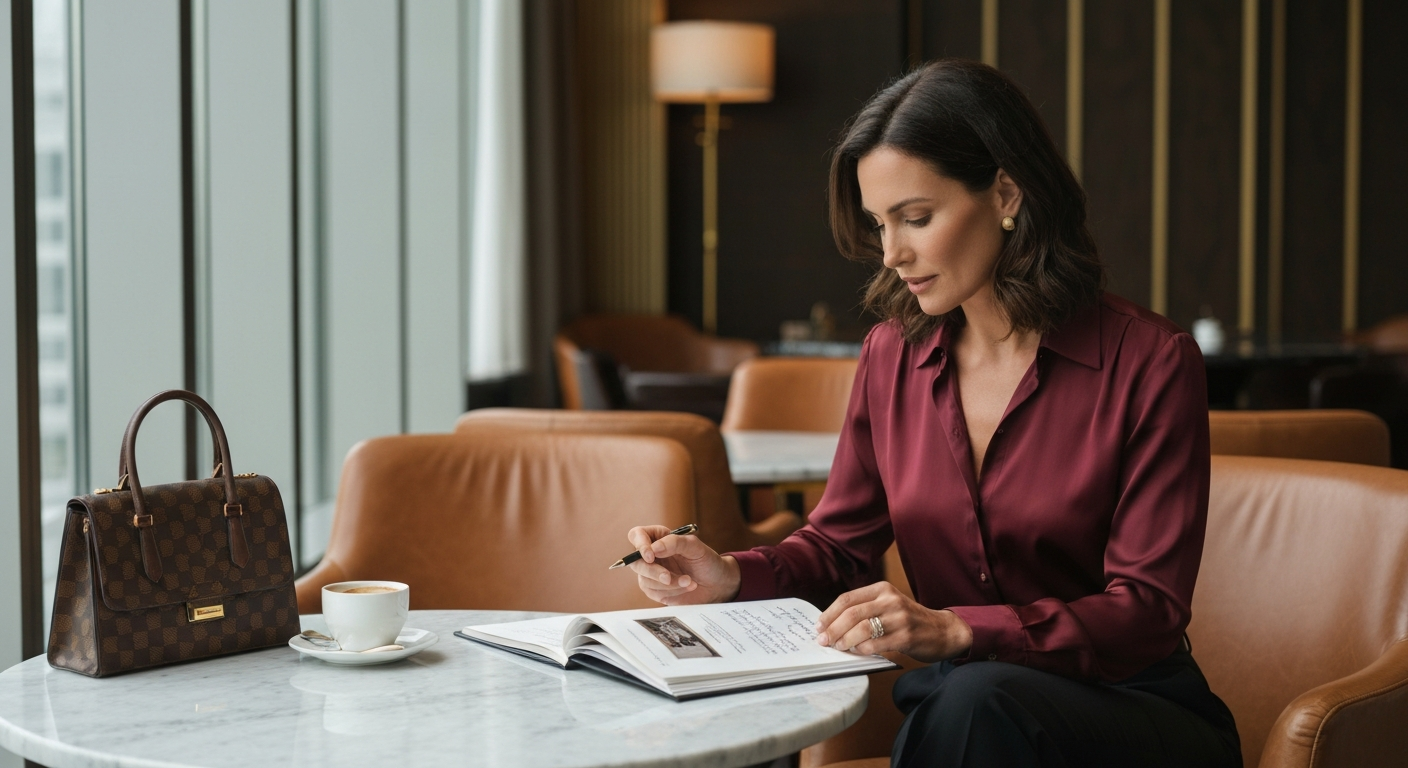
The dress code at art auctions follows an unwritten law: elegance without extravagance. In my experience, a classic sheath dress in muted colors such as navy, charcoal or black is always right. At an evening auction in fall 2023 at the Dorotheum in Vienna, I wore an ankle-length Max Mara dress in dark teal, combined with a simple pearl necklace and Manolo Blahnik pumps with a 2.75-inch (7 cm) heel.
The choice of color is crucial: colors that are too bright are distracting, ones that are too plain look boring. I rely on high-quality materials like silk, cashmere or fine wool blends. My budget for an auction outfit is between $900 and $1,700, and I invest in timeless pieces that I can wear many times.
I choose jewelry deliberately understated. A subtle watch, such as a Cartier Tank or Jaeger-LeCoultre Reverso, signals style without showiness. Flashy costume jewelry is taboo, as are jangling bangles that would be disruptive during applause.
Accessories and details for the perfect appearance
My handbag is always small and elegant, ideally a clutch or a small shoulder bag by Bottega Veneta or Valextra. It has to have room for the auction catalog, a slim notebook, a quality ballpoint pen and my smartphone. I avoid large totes, which are impractical in a tight auction room.
The shoes have to be not only elegant but also quiet. Heels with rubber soles are practical, since you have to be able to move during the auction without making disruptive noise. My experience shows that auctions often last longer than planned. At a modern art sale at Grisebach in Berlin in June 2024 we sat for nearly 3.5 hours, so comfort shouldn't be neglected.
Networking in the art world: making contacts with substance
Art auctions are not only sales events but important networking events of the international art scene. I make deliberate use of the preview days before the actual auction to start conversations. At these viewings the atmosphere is more relaxed, which makes it possible to get to know gallerists, collectors and curators.
A concrete example: in March 2024 I visited the preview of a contemporary art auction at Ketterer Kunst in Munich. There I got into a conversation with a Swiss collector about a work by Neo Rauch. The conversation later led to an invitation to a private exhibition opening in Zurich. Connections like that only arise when you're prepared and can talk knowledgeably.
I never ask pushy questions about buying intentions or budgets. Instead I focus on the artwork itself: technical details, art-historical context, comparisons to other works by the artist. This approach is appreciated in the art world and opens doors.
Mastering cultural events with confidence as a companion
Accompanying art auctions is part of a larger spectrum of cultural events that also includes gallery visits, museum openings and art fairs. The boundaries are fluid, and anyone who wants to succeed in this milieu has to move confidently in all formats.
At Art Basel in June 2024, I accompanied a businessman to several VIP previews. The preparation was as intensive as for an auction: I studied the exhibitor list, marked interesting galleries and read up on the featured artists. The investment of about 6 hours of preparation time let me be a competent conversation partner during the three-day fair.
My experience shows that successfully accompanying wealthy gentlemen always rests on two pillars: a professional appearance and solid knowledge. Both can be achieved through systematic preparation.
The right balance between restraint and presence
As a companion at cultural events, I move in a delicate field of tension. On the one hand I want to support and enrich my companion, on the other I mustn't dominate or push myself to the foreground. This balance takes sensitivity and experience.
I've learned to recognize moments when my input is wanted and those when restraint is appropriate. When my companion is talking with an important business partner, I stay discreetly in the background. When he actively draws me into the conversation, I contribute well-informed points without lecturing.
Practical checklist: how to prepare for an art auction
Based on my experience at more than 30 high-profile auctions, I've developed a systematic approach that I go through every time.
- 14 days before: download the auction catalog and do a first read-through, mark the top lots and research the artists
- 10 days before: deeper research on 5-7 key works, check price trends for comparable works, read articles on the featured artists
- 7 days before: plan and try on the outfit, break in new shoes, put together accessories
- 3 days before: visit the preview at the auction house if possible, view the works in person, talk with the specialists
- 1 day before: final catalog review, check current art market news, plan route and timing
- On the day itself: arrive 30 minutes before the start, choose your seat strategically, take a moment for mental preparation
This structured approach gives me confidence and lets me respond with composure even to unexpected situations. The investment of 12 to 15 hours of preparation in total per auction may seem high, but it pays off in professionalism and self-assurance.
Frequently asked questions about accompanying art auctions
How do I dress appropriately for an art auction in summer?
Even in summer, the rules of elegant restraint apply. I choose a sleeveless sheath dress in light silk or a linen blend in muted tones, pair it with a fine wrap for air-conditioned rooms and wear closed-toe pumps. Too much bare skin is inappropriate. A dress just above the knee, at most knee-length, is ideal. At a summer auction in July 2023 at the Dorotheum in Vienna, I wore a cream linen dress by Akris with 3/4 sleeves, which worked perfectly.
May I take notes during an auction?
Yes, notes are allowed and are even appreciated as a sign of interest. I use a slim A5 notebook and a high-quality, quiet-writing fountain pen. What matters is that the writing is discreet and doesn't make any disruptive noise. I note lot numbers, prices achieved and interesting observations. These notes help me reflect on the event later and deepen my knowledge.
How do I handle an accidental bid?
If an unintended bid does happen, you have to react immediately. I would approach the auctioneer right after the hammer falls and clarify the situation. At most renowned houses an obvious misunderstanding is handled with goodwill, but you should never count on that. The best strategy is prevention: keep your hands in your lap or on the catalog, and make eye contact with the auctioneer only deliberately.
What role do I play as a companion when my partner is actively bidding?
My role is that of discreet support. I stay calm and neutral, show no emotions and avoid any gesture that could be interpreted as a bid. After the hammer falls, I congratulate quietly but with restraint. What matters is that I give my companion confidence without drawing attention to myself. During the break I can then go into more detail about the acquired work and bring in my knowledge.
How do I build long-term expertise in the art market?
Expertise comes from continuously engaging with the subject. I regularly visit exhibitions, read journals like Kunstforum International and Monopol, listen to podcasts like Art Matters from Monopol Magazin and take part in tours and lectures. A year-long art history course at an adult education center or an online course on platforms like Coursera can provide solid basic knowledge. Regularity is what counts: better to invest 2 hours every week than a whole day once a month.
Conclusion: preparation is the key to a confident appearance
Accompanying art auctions takes far more than an elegant outfit and good manners. It's the combination of solid art knowledge, perfect etiquette and the ability to move discreetly but competently that makes the difference. My experience shows that nothing replaces systematic preparation.
The investment of 12 to 15 hours of preparation time, a well-thought-out budget for quality wardrobe and continuous engagement with the art scene pay off in self-assurance and recognition. Anyone who internalizes these standards will be seen not just as a stylish companion but as a competent conversation partner on equal footing.
If you want to keep building your professionalism in this demanding segment, it's also worth looking at other aspects such as financial independence as a companion. Because true composure only arises when outward elegance goes hand in hand with inner strength and economic independence. Art auctions are not only a professional challenge but also a chance to immerse yourself in a fascinating world and make valuable connections.