Table Manners on a First Date: How to Impress at a Fine Restaurant
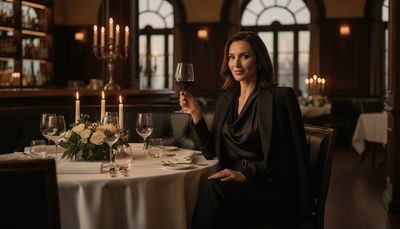
Reading time: 10 minutes
When I spent my first evening at "Victor's Fine Dining by Christian Bau" in Saarland three years ago, an internationally known entrepreneur sat across from me, and I knew exactly what was at stake: one misplaced fork would cost me more than an embarrassing moment. Table manners on a date in fine dining are not dusty rules but a clear sign of trust. They show that you move comfortably in his world without having to pretend to be someone you're not.
Lifestyle dating is about much more than spending time together. When you accompany a successful man, you are being watched, by business partners, by waiters, sometimes even by the media. A confident presence at your first shared dinner opens doors, while fumbling with the cutlery closes them. I'll show you how to feel at ease in upscale restaurants while staying authentic.
Why table manners on a date decide the first impression
According to a 2023 study by the German market research institute GfK (Gesellschaft für Konsumforschung), 67 percent of respondents in Germany rate polished manners at the table as decisive for the overall impression of a person. In fine dining, this factor becomes even more important. A man who is used to eating in Michelin-starred restaurants can tell within minutes whether his companion feels at home in this setting, or whether she's struggling through it.
I have experienced this dynamic myself. At a business dinner at "Aqua" in Wolfsburg, I noticed how my dinner partner relaxed when I used the aperitif fork correctly and always placed my water glass to the right of the wine glass. Details like these seem subtle, but they leave a lasting impression. They signal worldliness without a word being said.
Restaurant etiquette is also a form of self-protection. If you know the rules of the game, you feel secure, can focus on the conversation and come across as naturally elegant. If you're unsure, you tense up, and your dinner partner can feel it. That's why I invest time in preparation before I visit a new upscale restaurant. It always pays off.
The basics: using cutlery, glasses and napkins correctly
Fine dining follows clear rules that barely differ internationally. The most important rule of thumb: you work your way through the cutlery from the outside in. The outermost pieces are for the first course, the innermost for the main course. At a classic five-course menu at "Vendôme" in Bergisch Gladbach, there are three forks on the left, three knives on the right and two dessert utensils above the plate.
You place the napkin on your lap right after sitting down, never in your collar or under your chin. If you leave the table briefly, you put the napkin loosely on your chair, never on the table. Only after the meal do you place it to the left of your plate. This small gesture tells the waitstaff that you have finished your meal.
Glasses always stand to the upper right of your plate. The large glass is for water, the smaller ones for white and red wine. You hold each glass by the stem, never by the bowl, since fingerprints on fine crystal are a no-go. When you clink glasses, you lift yours slightly without clanking. In very exclusive establishments there is no clinking at all, just a nod.
Cutlery language: signals to the staff
Upscale restaurants work with cutlery language. When you take a break, you cross your knife and fork on the plate, fork at the lower left, knife above it on the right. When you're finished, you lay both parallel at the four o'clock position. These positions are no coincidence but an international code. At "Le Moissonnier" in Cologne, I saw the staff react within seconds when I placed my cutlery in the four o'clock position. Not a word was needed.
Conversation and body language at an upscale meal
Table manners on a date go beyond cutlery. Your body language is at least as decisive for the impression you leave. I make sure to sit upright without looking stiff. My elbows stay beside my body, never on the table. Only my forearms may rest briefly on the edge of the table when no course is being served.
Eye contact is essential. When your dinner partner speaks, you listen actively, not just with your ears but with your whole face. I nod slightly, smile at the right moments and ask follow-up questions. That shows interest and builds trust. At the same time, I eat slowly. Anyone who eats hastily comes across as nervous or unaccustomed to it. A three-star menu often lasts three hours, and the pace should stay relaxed.
There are certain topics I don't bring up at the table: health problems, money in concrete figures, exes. Instead I choose culture, travel, current projects, topics that put my dinner partner in a good light and show my curiosity at the same time. A question like "Which project is occupying you most right now?" opens doors and shows genuine interest.
Clothing and preparation: the first step to a stylish presence
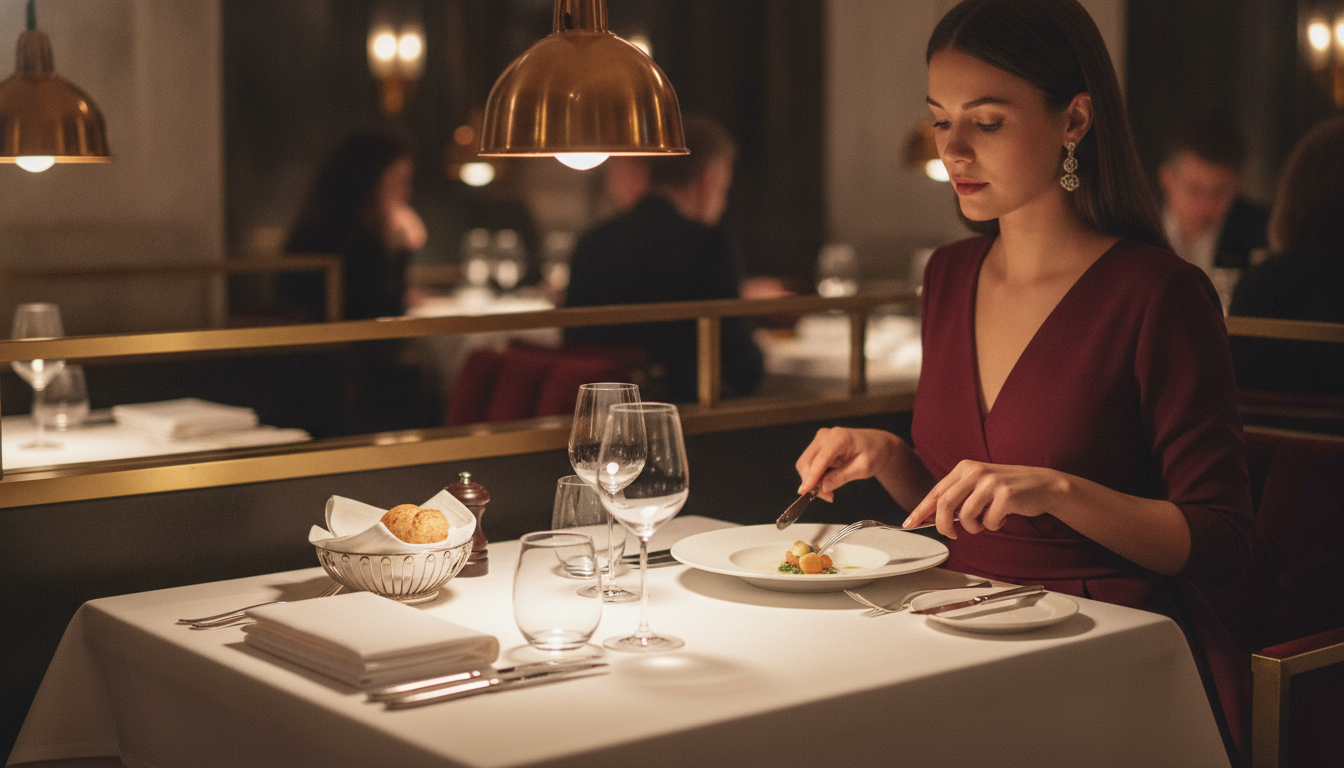
Before you even enter the restaurant, your clothing decides your credibility. I always look up the dress code. For "Überfahrt" on Lake Tegernsee, I chose a simple black Max Mara dress, understated jewelry and closed-toe pumps. Some establishments call for "smart casual," others for "black tie." A phone call to the restaurant clears up any doubts.
Just as important: I find out about the cuisine. If I know the chef is famous for his seafood, I can bring it up in conversation. That shows preparation and appreciation. Small details such as the sommelier's name or the history of the house can also be conversation starters. I find this kind of information on the restaurant's website or in current gourmet guides such as the Michelin Guide.
One more point: I eat a little something beforehand. If you arrive at a Michelin-starred restaurant starving, you fight your own appetite and come across as less in control. A small snack at home lets you enjoy yourself in a relaxed way without looking greedy.
Typical faux pas and how to avoid them
Even experienced companions occasionally trip over small things. I keep a list of the most common mistakes I've observed, or made myself, over the years:
- The phone is on the table: an absolute no-go. The smartphone belongs in your handbag. Putting it on the table signals disinterest.
- Lipstick on the glass: blot your lipstick before eating or choose a matte, long-lasting formula. Marks on crystal glasses look careless.
- Loud slurping or smacking: even if the soup is hot, small spoonfuls and mindful eating prevent noise.
- Addressing the staff wrongly: shouting "Waiter!" across the room or snapping your fingers is outdated. I say "Excuse me" or use the person's name if the server has introduced themselves.
- Drinking too much: I stick to one rule: one glass of wine per course, three glasses at most overall. If you look drunk, you lose all elegance.
How I handle unexpected situations
Sometimes mishaps happen. A wine glass tips over, a piece of cutlery falls to the floor. In moments like these, I stay calm. I don't pick up the cutlery myself but discreetly ask the staff for a replacement. Apologies are brief and matter-of-fact, never dramatic. An "Oh, I'm so sorry" is perfectly enough. Making too much of a fuss only amplifies the embarrassment.
Special situations: wine pairing, amuse-bouche and unfamiliar dishes
In upscale restaurants, certain rituals are part of the experience. The wine pairing is one of them. When the sommelier presents a selection, I leave the decision to my dinner partner, unless he explicitly asks for my opinion. Then I name my preference without sounding like I'm lecturing. An "I tend to like fruity white wines, if that works" is perfectly sufficient.
I always eat the amuse-bouche, those small bites that are the kitchen's greeting, completely. They are often designed to be eaten in one bite. If I'm unsure how something is eaten, I briefly watch my dinner partner or the staff. When in doubt, I ask politely, since an honest question is more charming than a clumsy attempt.
Unfamiliar dishes are a chance to show curiosity. I always try everything, even if it's unusual. Sea urchin, offal, fermented ingredients: dishes like these separate the seasoned from the inexperienced. Staying open-minded shows a cosmopolitan outlook. If I really don't like something, I leave it discreetly on the plate without comment.
The bill: who pays and how do I behave?
In an arrangement with successful men, the host generally takes care of the bill. I don't offer to pay unless we agreed otherwise beforehand. When the check arrives, I politely ignore it: no glance at it, no comments. That is part of discretion.
Should the man hesitate for whatever reason, I stay relaxed. For cases like that I always carry a credit card and could easily step in without it becoming awkward. In five years, though, that has never happened to me. Anyone who gets involved in upscale dates knows the rules of the game.
After the meal: saying goodbye and the final impression

The evening doesn't end with dessert. When I get up, I place the napkin to the left of the plate, push my chair back quietly and thank the staff. A friendly "Thank you so much, it was wonderful" leaves a positive last impression, not only on my companion but also on the team who looked after us.
On the way out, I avoid loud conversations and extended phone-checking. Only in the car or out on the street do I relax completely. This last phase is still part of the overall picture. If you stay elegant until the very end, you're perceived as an all-round stylish companion.
Practice makes perfect: my personal recommendation
You don't learn table manners from books alone. I recommend practicing deliberately in upscale restaurants, even without a date. Book a table at a Michelin-starred restaurant in your city, go alone or with a friend, and observe. How does the staff move? How do the other guests eat? What is the atmosphere like? Scouting trips like these have taught me more than any etiquette seminar.
Training can also help. The German Knigge Society (Deutsche Knigge-Gesellschaft) regularly offers workshops where table manners are practiced hands-on. Events like these cost between $160 and $325, but they are an investment in your professionalism. In 2022 I took a two-day course in Hamburg and learned subtleties that still help me today.
FAQ: table manners on a date
How should I behave when I don't recognize a dish?
Ask politely. A "Could you briefly explain how this dish is eaten?" is perfectly acceptable and shows a willingness to learn. The staff in upscale restaurants are prepared for this and happy to help.
May I use my phone during the meal?
No. The phone stays in your bag throughout the meal. The exception is an important call that you announced beforehand. In that case you excuse yourself, step outside briefly and return promptly.
What do I do if I can't manage the cutlery?
Discreetly watch your dinner partner or follow the waitstaff. If you're unsure, go with the conservative approach: fork on the left, knife on the right, eat slowly. When in doubt, you can also simply leave an unfamiliar utensil on the table.
How do I handle allergies or intolerances?
Inform the restaurant when you make the reservation. Reputable establishments are accommodating and adjust the menu. At the table itself, mention it only if asked directly, and never make it the main topic of the evening.
Should I tip if my companion is paying?
No. If your companion takes care of the bill, he also takes care of the tip. You can thank the staff, but financial gestures are his job at that moment.
Conclusion: table manners as part of your professionalism
Table manners on a date are not an end in themselves. They are a tool that lets you move confidently in demanding situations. If you master the basics, you can focus on what matters: the conversation, the atmosphere, the connection with the person across from you. In the world of lifestyle dating, polished restaurant etiquette opens doors that remain closed to others.
Over the past few years I have visited dozens of upscale restaurants, from Berlin to Zurich. Every time I learned something new. The basic rules, however, stay the same: respect, attentiveness, composure. If you internalize these three principles, you'll hold your own in any restaurant and make a lasting impression on your companion.
Start with small steps today. Practice the cutlery basics at home, visit an upscale restaurant alone or with a friend, observe and learn. The more routine you develop, the more natural you'll appear. And that is exactly the goal: not perfectly staged, but authentically elegant. Best of luck on your way to a stylish presence.